Best AI Model for Writing in 2026
There's no permanent "best" AI model for writing in 2026 — rankings shift monthly. Here's what to evaluate instead, and how.
Search for the best AI model for writing and you'll find a confident answer within the first few results. Search again in six weeks and the confident answer will have changed, often to a different model entirely, sometimes from the same publication. That's not a sign the earlier answer was wrong. It's a sign of how fast this specific race is moving in 2026 — new model versions ship from multiple labs within days of each other, benchmark leaderboards reshuffle monthly, and a "best for writing" verdict published in the spring is already dated by late summer.
That instability isn't a reason to give up on the question. It's a reason to ask it differently. Instead of looking for the one model currently sitting at the top of a ranking that will move again next month, it's more useful to know what actually separates a strong writing model from a weak one, and to have a way of checking that for yourself, on your own writing, whenever you need an answer rather than trusting a headline that may already be stale.
Why "best" keeps moving
The pace of change here is genuinely unusual compared to most software categories. Multiple frontier labs have shipped major model updates within the same month this year, sometimes within the same week, each claiming ground on a different benchmark or a different specific capability. A model praised for the most natural prose in one comparison gets challenged by a competitor's release a few weeks later, and the challenger gets challenged again shortly after that. Treating any single named model as a permanent answer to "best for writing" means building a workflow around a title that's likely to change hands again before the ink is dry.
This is worth taking seriously rather than dismissing as marketing noise, because it has a real practical consequence: a writing workflow built around one specific model, chosen once and never revisited, is quietly betting that this particular snapshot in a fast-moving race will hold. The more durable approach is knowing what to actually evaluate a writing model on, so a new release from any lab can be judged on the same terms rather than requiring you to start the research over from scratch every time the leaderboard shifts.
What actually separates a strong writing model from a weak one
A handful of criteria matter more than raw benchmark scores when the task is genuinely about writing rather than generic reasoning. The first is voice consistency across length. A model can produce one impressive paragraph and then drift noticeably by page three of a longer document — losing the tone it started with, repeating structural patterns, or subtly shifting formality as the piece goes on. Judging a writing model on a single short sample tells you almost nothing about whether it can hold a consistent voice across a genuinely long piece, which is where a lot of real writing work actually lives.
The second is revision handling. Real writing is iterative — "make this warmer," "cut the second paragraph," "tighten this without losing the specifics" — and a model's usefulness depends heavily on how well it incorporates that kind of feedback without either ignoring the note or overcorrecting and rewriting the whole piece from scratch when you only asked for one change. The third is how a model handles hedging versus decisiveness, which varies by design across labs and matters differently depending on the writing task: a model tuned to hedge carefully around uncertain claims is well suited to careful, fact-sensitive writing, while a model tuned toward confident, punchy phrasing tends to work better for persuasive or fast-turnaround business copy, even if it's less naturally cautious with a claim that needs real precision.
The fourth, and the one that's easiest to overlook in a quick test, is genre fit. A model that excels at structured business writing doesn't automatically transfer that strength to creative fiction, and a model praised for natural-sounding prose in casual writing doesn't automatically hold up on technical documentation that needs to be precise rather than expressive. Different labs have genuinely leaned into different strengths here — some toward long-form narrative voice, some toward fast, concise, high-volume copy, some toward research-grounded writing that stays close to verifiable sources — which is exactly why a single universal "best" answer tends to collapse once you look at more than one kind of writing.
The practical method: test it on your own writing
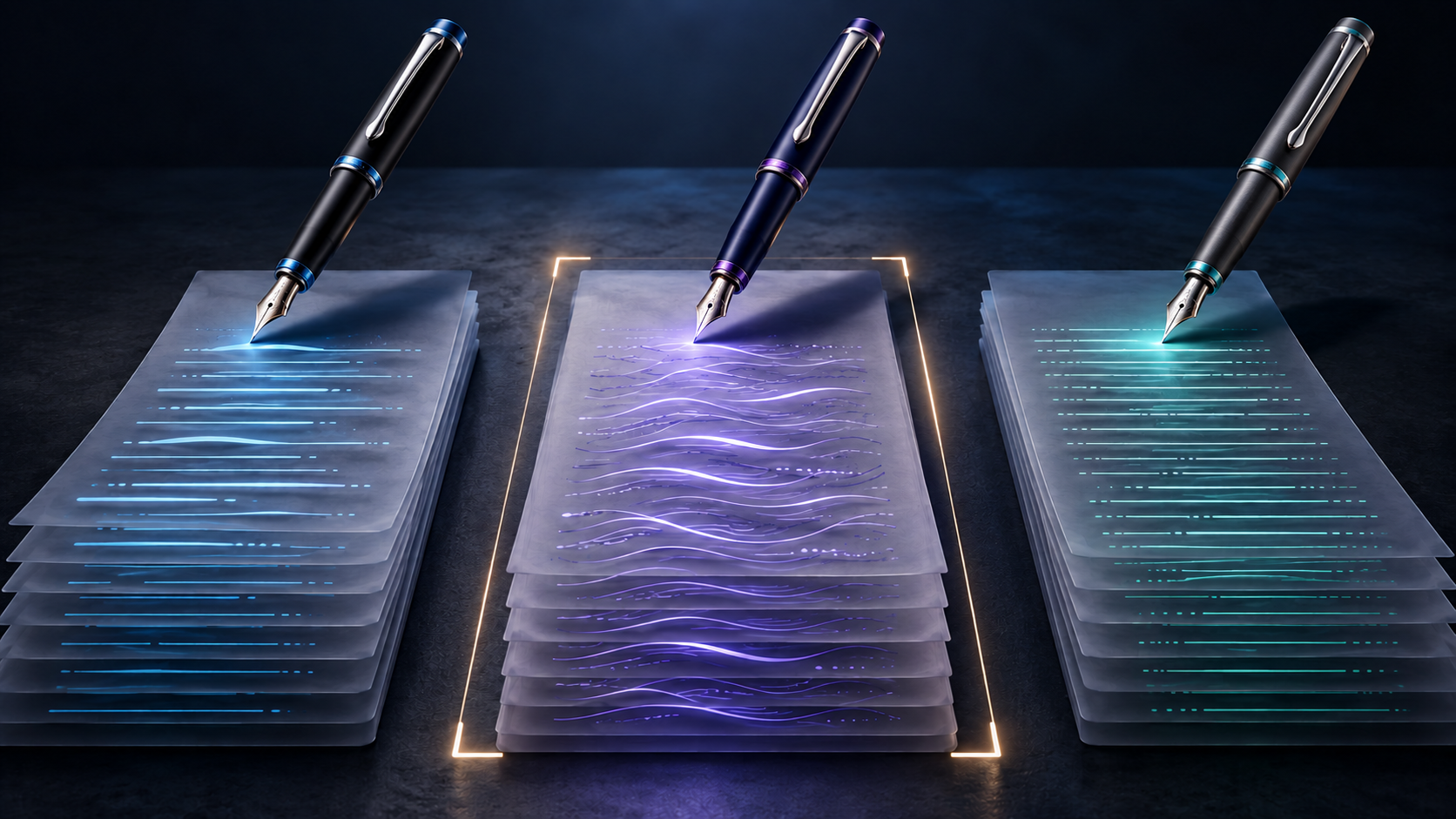
Given how quickly the field moves and how genre-dependent the right answer is, the most reliable way to answer "which model is best for my writing" isn't reading a comparison article — it's running the comparison yourself, on the kind of writing you actually do, using a small, consistent set of criteria. Take a real piece of writing you'd normally produce, send the identical prompt to a couple of different models at the same time, and judge the results against the specific things that matter for your work: does it hold your voice, does it handle a revision note the way you'd want, does the tone survive past the first paragraph. That answer is more useful than any published ranking, because it's built from your actual writing rather than a generic benchmark, and it stays valid regardless of which model happens to be topping a leaderboard this particular month.
This also solves the staleness problem directly. A comparison you run yourself today reflects today's models. When a new release shifts the landscape again in a few weeks, rerunning the same small test takes minutes, and gives you a current answer without needing to track every headline claiming a new "best" model has arrived.
Where Kahlo fits into this
This is exactly the workflow Kahlo's Compare feature is built to make easy. Instead of trusting a ranking that may already be a month out of date, Compare sends the same writing prompt to two models at once, side by side, so you can judge voice, tone, and revision handling directly on your own material rather than someone else's benchmark sample. Because every model in the workspace pulls from the same project files, memory, and standing instructions, the comparison is genuinely fair — each model is working from identical context, so what you're actually seeing is the real difference in how each one writes, not a difference caused by one model having more background than the other.
For a longer piece where voice consistency matters most, that same shared context carries forward as you keep working, so a model that's proven itself on your voice in one session doesn't lose that grounding in the next. And because more than 50 models across 14 labs live in the same workspace, testing a genre-specific hunch — this model for the fiction chapter, a different one for the punchy marketing copy — doesn't require separate subscriptions or separate accounts to check. The honest answer to "what's the best AI model for writing in 2026" is that it depends on your genre and it changes fast — which is exactly why having a fast, fair way to check it yourself matters more than any single headline claiming to have settled the question. This is the first in a short series looking at how to actually evaluate the best model for a specific kind of work — research and coding are next.